


Power of 3D printing Nylon in the landscape of digital manufacturing
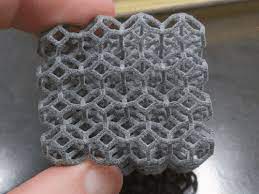
Nylon 3D printing is getting more and more traction because of its many advantages. Nylon 12 is used as the printing material in an additive manufacturing technique known as “3D printed Nylon 12.” Nylon 12, which is a thermoplastic polymer that is a member of the nylon family, is also referred to as polyamide 12 or PA12. Usually, Nylon 12 comes in the form of a fine powder when used in 3D printing. Nylon 12 powder is layered and selectively fused using a laser during the 3D printing process, which is sometimes referred to as powder bed fusion or selective laser sintering (SLS). Layer by layer, the powder is melted and solidified by the laser to create a three-dimensional object. Excellent mechanical qualities, resilience to chemicals, and durability characterise Nylon 12. It is frequently employed in applications where parts that are robust, flexible, and impact-resistant are needed. Complex geometries and elaborate designs that would be difficult or impossible to create with traditional manufacturing processes can be created thanks to the 3D printing process. Nylon 12 can be used to print a wide range of products, including functional parts, prototypes, and finished goods for use in the consumer goods, automotive, and aerospace industries.
Nylon is a strong, long-lasting material.
You are surrounded by objects composed of nylon, also known as polyamide or PA, which is strong and resilient. It’s what keeps your car’s intake manifolds and vents lightweight and strong, keeps artificial turf in top condition for pro football seasons, houses the majority of our electronics, and is used to make everything from factory gears to skateboard wheels. Since nylon has been used in product manufacturing for almost a century, it is a material that is familiar to 3D printers. Nylon is the most popular print material in additive manufacturing because it has all of its well-known properties when used for 3D printing, both in filament form and loose powder. The following traits apply to nylon:
- Durability
- Flexibility
- Resistance to chemicals
- Resistance to impacts
- Moderately absorbent of moisture, which facilitates dyeing
- resistant to sunlight
- elevated melting point
- resistant to abrasion
- less heavy than metal
- Electrically insulating
Nylon is not just a material. Nylon comes in many different categories, and even within those categories, there are various brands, blends, and formulas. And that’s just the nylon that can be used with additive manufacturing, or 3D printing. Nylons for 3D printing are available as powder and filament, with new varieties hitting the market each year. There are three types of nylons: recycled and composite; “filled” nylons, which contain components like carbon fibres, glass, kevlar, or other materials; and a recently developed class of nylons termed “sustainable nylons,” which are made from renewable resources.
Since nylon is constructed of a synthetic polymer generated from fossil fuels, it is thought to be an environmentally detrimental material. However, an increasing number of nylons are being made of more sustainable ingredients; one example is the Infinam eCO PA12 from Evonik, which is made entirely of recycled cooking oil. Expect more in the near future as PA12 generated from renewable resources, as opposed to non-renewable petroleum-based sources, is becoming more and more popular in the manufacturing industry overall and is gradually finding its way into additive manufacturing materials.
Advantages of nylon 3D printing
Nylon has several benefits when 3D printed, two of which are its strength and durability. Because of its versatility, nylon is one of the most widely used materials for 3D printing. It can be utilised for a wide range of applications, from end-use parts to prototypes. Nylon filament is a fantastic option for both novice and expert 3D printers because it is also reasonably simple to print with. Strength is one of the main benefits of using nylon for 3D printing. Nylon is a strong material that is perfect for 3D printed parts that will be used extensively because it can tolerate a lot of wear and tear. Nylon is also very lightweight, making it suitable for 3D printed objects that need to be sturdy but lightweight.
The durability of nylon that has been 3D printed is another benefit. Nylon is a great material for applications where parts may be exposed to extremely hot bed temperatures or abrasive chemicals since it is resistant to both heat and chemicals. Additionally, nylon requires less post-processing after printing, making it a low-maintenance 3D printing material.


