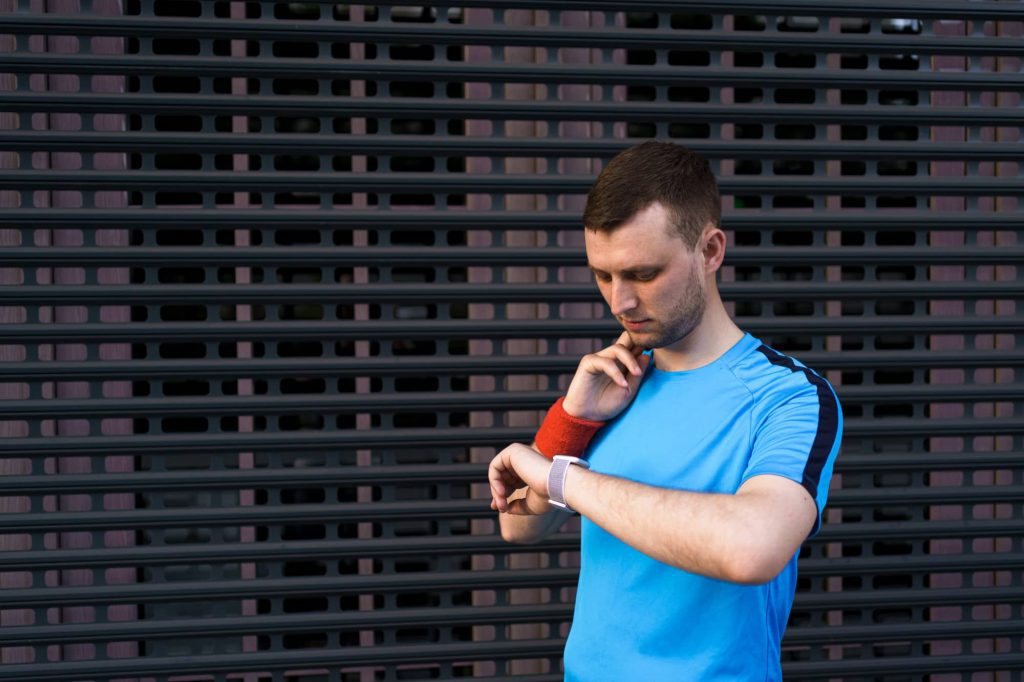
We are in an age where overall health and fitness take centre stage, especially post-pandemic. Our tech-savvy generation has increasingly begun to harness the power of smart technologies and metrics to gain a holistic view of their well-being. One key indicator of a healthy body is our resting heart rate. This reading is based on the heart’s beats per minute while the body is in a state of rest. Monitoring our resting heart rate is fundamental to maintaining cardiovascular fitness while also providing insights into the efficiency of the cardiovascular system. In doing so, one can gain insight into their current and future health.
What is Resting Heart Rate?
The first step to taking a healthier approach would be to understand what a resting heart rate is. It is basically taking note of the number of heartbeats per minute while resting. In this moment, the body should be free from the influence of external factors such as stimulants, physical exertion, or stress. It is completely normal for your heart rate to slightly differ from that of someone else. Your heart rate reading can also vary throughout the day, depending on the activity your body is involved in. A normal and healthy resting heart rate for adults can range anywhere from 60 to 100 beats per minute. This baseline is not fixed, as it has a myriad of factors that can influence this reading. Some of the factors comprise medications being taken, fitness levels, age, smoking, lifestyle choices, and any tumultuous emotions experienced that could lead to stress.
An important point to keep in mind is that a normal heart rate does not represent normal blood pressure. Those are two entirely different concepts. A physician uses blood pressure to check how fast the blood moves through blood vessels.
A simple way to check your resting heart rate without any devices or professional help is by checking your pulse. Check for a pulse at the side of the neck or the back of your wrist by using your index and middle finger. Count the number of beats per minute or for 30 seconds, which can then be multiplied by two. Repeat this process over a span of a few days and multiple times during the day to arrive at a more accurate resting heart rate reading.
How to Effectively Calculate Resting Heart Rate?
A far more convenient, accurate, and easy-to-use method is wearable devices. There has been a permeation of smartwatches, health monitoring applications, and other wearable fitness trackers into the healthcare market. These technologically advanced devices and applications have been designed and developed to provide insight into the user’s heart rate and other key offerings like sleep monitoring capabilities, medication, and other important reminders, and geo-location information. These solutions amalgamate information and measurements throughout the day, providing an easy way to monitor the user’s average resting heart rate. This wealth of data empowers users to adopt a proactive approach to their health. It allows for timely interventions or lifestyle adjustments based on fluctuations in the resting heart rate.
It is important to check your heart rate throughout the day to see if there are any shifts in the reading. This is typically after a strenuous activity like exercising, a stressful event, or consuming caffeine, to name a few. Be vigilant, alert, and aware of your surroundings and any possible shift in your heart rate.
While there are a range of wearable solutions available on the market, be sure to opt for the right solution provider and their services. Ensure the solution has geo-location, alerts caregivers in an emergency, important reminders, holistic reports of the collected data, and seamless monitoring with adjustable thresholds.
Countermeasures to be Taken
However, it is important to keep in mind that in any event that you may feel like your heart rate is irregular, too high, or too low, please consult your healthcare provider. Consecutively, schedule a heart health screening, if required.
If the heart rate is higher than normal, your healthcare provider may recommend a few lifestyle changes to counter an abnormally fast heartbeat. Consider exercising regularly, practicing relaxation techniques like meditation and yoga, avoiding certain over-the-counter medications that adversely affect the heart rate, hydrating, reducing weight, and staying away from smoking and alcohol consumption.
It is through the combination of awareness, lifestyle choices, and technological advancements that optimal cardiovascular well-being can be achieved.