If you are expecting a baby, one of the most important decisions you will have to make is where your baby will sleep. You may have heard of two options: crib and bassinet. But what is the difference between them, and which one is better for your baby? In this blog post, we will compare and contrast the features, benefits, and drawbacks of cribs and bassinets and help you decide which one is best for you and your baby.
What is a crib?
A crib is a bed that is specially designed for infants and toddlers. It has a mattress that fits snugly inside a frame and four slatted sides that prevent the baby from falling out. Cribs are usually made of wood, metal, or plastic and come in different sizes, shapes, and styles. Some cribs can be converted into toddler beds or even full-size beds, while others have features like drawers, changing tables, or attached mobiles.
What are the pros and cons of a crib?
Pros:
- Long-lasting: A crib can last several years and accommodate babies from birth until they are ready to move to a regular bed. Some cribs can even be transformed into toddler or full-size beds, extending their lifespan further.
- Spacious: A crib provides enough space for your baby to move around, stretch, and play. It also allows you to add bedding, toys, or other accessories to make your baby more comfortable and entertained.
- Sturdy: A crib is made of durable materials and has a stable structure that can withstand your baby’s weight and movements. It also has high sides that prevent your baby from climbing out or falling over.
Cons:
- Expensive: A crib is usually more expensive than a bassinet, as it is larger, heavier, and more complex. It may also require additional costs for accessories, such as bedding, mattresses, or conversion kits.
- Bulky: A crib takes up a lot of space in your home, especially if you have a small bedroom or nursery. It may also be difficult to move or transport, as it is heavy and bulky.
- Less convenient: A crib may not be very convenient for you, especially if you want to keep your baby close to you at night or during the day. You may have to walk to another room to check on your baby or lean over the high sides to pick up or put down your baby. This can be challenging, especially if you are recovering from childbirth or have back problems.
What is a bassinet?
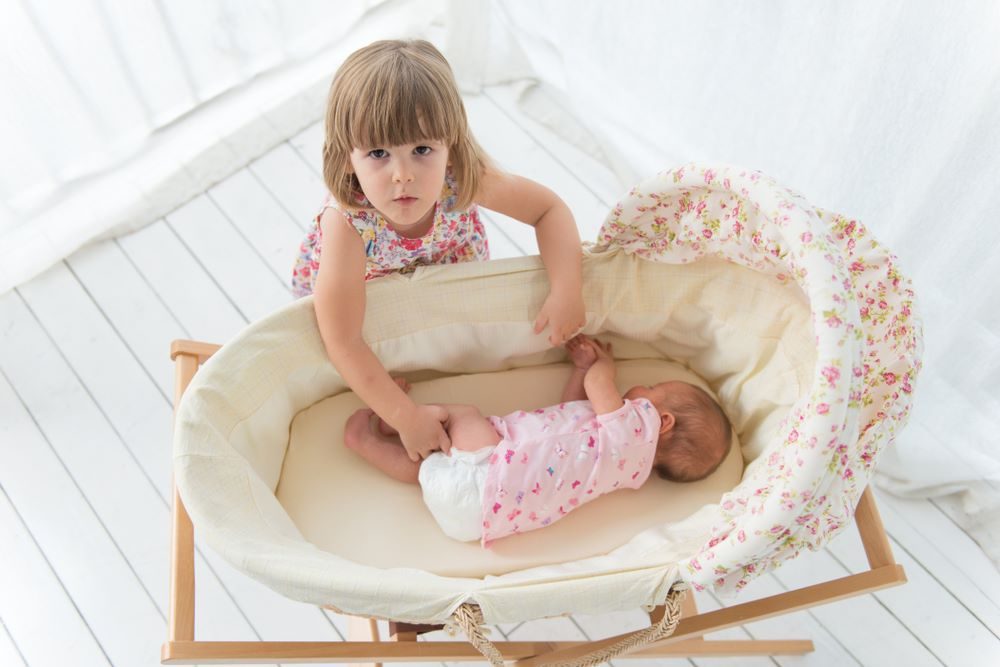
A bassinet is a compact bed that is designed for newborns as well as young infants. It features a hood or cover that can be drawn over to shade your infant, and a soft mattress that fits inside a frame that resembles a basket. Bassinets are usually made of wicker, plastic, or metal and have a stand or a base that can be fixed, wheeled, or rocked. Some bassinets can also be attached to other surfaces, such as strollers, playpens, or beds.
What are the pros and cons of a bassinet?
Pros:
- Affordable: A bassinet is usually cheaper than a crib, as it is smaller, lighter, and simpler. It may also come with some accessories, such as bedding, sheets, or canopies, included in the price.
- Portable: A bassinet is easy to move around your home, as it is light and compact. It may also have wheels or a handle that makes it easier to transport. Some bassinets can also be folded or collapsed for storage or travel purposes.
- Convenient: A bassinet is very convenient for you, as it allows you to keep your baby close to you at night or during the day. You can place it next to your bed, on your couch, or in any room. You can also easily reach your baby, as the sides are low, and the hood or cover can be opened or removed.
- Cozy: A bassinet provides a cozy and snug environment for your baby, as it is small and enclosed. It may also have a rocking or swinging motion to soothe your baby and help them fall asleep.
Cons:
- Short-lived: A bassinet can only be used for a few months, as it has a weight limit and a size limit. Once your baby reaches the limit, the bassinet becomes unsafe and uncomfortable for your baby. You will have to buy a crib or another bed for your baby to sleep in.
- Limited: A bassinet has limited space and features for your baby. It may not have enough room for your baby to move around, stretch, or play. It may also not have any toys, mobiles, or other accessories to entertain your baby.
- Risky: A bassinet may pose some risks for your baby, such as tipping over, collapsing, or trapping your baby. It may also have some hazards, such as loose parts, gaps, or soft bedding, that can cause suffocation, strangulation, or entrapment.
What are the differences between cribs and bassinets?
The main differences between cribs and bassinets are:
| Features | Cribs | Bassinets |
| Size and space | Small, light, and easy to carry around. Takes up less space. | Big, heavy, and hard to move without help. Takes up more space. |
| Cost | Cheaper because they are made with lighter, less expensive materials. | More costly because they are made with higher-quality, stronger materials. |
| Safety | Safe until the baby reaches the weight limit. If the baby is too heavy, the bassinet can tip over. | Safe because the high sides prevent the baby from getting out or falling off. |
| Parenting Style | Good for parents who travel a lot with their baby. Good for parents who want to keep their baby close to them. | Good for parents who want to teach their baby to be independent. Good for parents who have a separate room for their baby. |
| Durability | Only lasts for a few months until the baby is six months old. | Lasts for several years until the baby is three years old. Can be changed into a toddler bed or a full-size bed. |
Conclusion
Choosing between a crib and a bassinet is a personal decision that depends on your budget, space, preference, and baby’s needs. Both options, including finding a suitable baby crib online, have pros and cons, and both can provide a safe and comfortable sleeping place for your baby. The most important thing is to follow the safety standards and guidelines for your crib or bassinet and to monitor your baby’s growth and development to ensure they sleep in the right place for them.