Precision manufacturing requires a controlled environment where product quality, cleanliness, and operational accuracy work together. Whether you manufacture medical devices, electronics, optical components, or pharmaceutical products, your workstation design directly affects workflow efficiency and contamination control. A well-planned cleanroom workstation helps you organize tools, reduce unnecessary movement, maintain cleanable surfaces, and support repeatable manufacturing processes.
Building an efficient workstation involves more than selecting a table. You need to evaluate cleanroom requirements, materials, ergonomics, equipment placement, and maintenance procedures. By addressing these factors early, you can create a workspace that supports precision manufacturing without compromising cleanliness or productivity.
Define Your Cleanroom Requirements
Start by identifying the manufacturing activities performed at each workstation. Assembly, inspection, component handling, and precision testing may require different layouts and equipment configurations.
Determine your cleanroom classification, contamination-control objectives, product sensitivity, and applicable industry requirements. Consider whether operators handle exposed components, use chemicals, or work with sensitive electronic assemblies.
Next, evaluate the available floor space and the movement of personnel, materials, and equipment. Your workstation should fit into the existing cleanroom layout without obstructing aisles, air returns, or required access points.
Document these requirements before selecting equipment. This step helps you avoid purchasing a workstation that occupies valuable space but fails to support your actual production process.
Select Materials That Support Contamination Control
Material selection influences durability, cleaning efficiency, chemical compatibility, and particle generation. Your workstation surfaces should withstand approved cleaning agents and routine disinfection without deteriorating or becoming difficult to maintain.
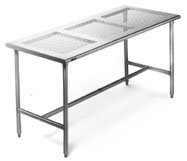
Stainless steel is frequently considered for cleanroom environments because it offers durability, corrosion resistance, and smooth surfaces. Other materials may be appropriate depending on chemical exposure, static-control requirements, load capacity, and manufacturing processes.
When comparing materials, evaluate:
Surface finish: Smooth, accessible surfaces are generally easier to clean.
Chemical resistance: Ensure the material is compatible with your cleaning agents and process chemicals.
Particle generation: Avoid finishes or components that can shed particles during use.
Structural strength: Confirm that the workstation supports equipment and materials safely.
Maintenance requirements: Consider how easily you can inspect, clean, and repair the structure.
Choose materials based on documented process requirements rather than appearance alone.
Design the Workstation Around Your Manufacturing Workflow
An efficient workstation places essential tools, components, and instruments within convenient reach. Poor layouts increase unnecessary movement, handling time, and the likelihood of operator errors.
Map your manufacturing process from material arrival to final inspection. Identify frequently used tools, component storage areas, measurement instruments, and finished-product transfer points.
Use these principles to improve your layout:
- Keep frequently used tools close to the operator’s primary work area.
- Separate incoming components from completed assemblies.
- Position inspection equipment to avoid unnecessary handling.
- Provide sufficient workspace for each manufacturing stage.
- Maintain clear access for cleaning, maintenance, and material transfer.
For changing production requirements, consider cleanroom workstations designed for precision manufacturing and organized laboratory workflows. The right configuration can help you adapt your workspace to different tasks while maintaining a consistent operating process.
Incorporate Ergonomic and Adjustable Features
Operator comfort is an important part of manufacturing accuracy. An uncomfortable workstation can contribute to fatigue, repetitive strain, and inconsistent handling during detailed assembly or inspection.
Choose a work surface height that suits the task and operator. Seated inspection, standing assembly, and microscope-based procedures may require different configurations. Where appropriate, adjustable-height workstations help accommodate multiple operators and production activities.
Also consider task lighting, monitor placement, foot clearance, and tool positioning. If employees wear cleanroom garments and gloves, verify that they can operate controls and handle components comfortably without unnecessary reaching.
Your goal is to create a workstation that supports precise movements and sustained concentration throughout the production shift.
Integrate Airflow and Electrostatic Discharge Controls
A cleanroom workstation must work with the facility’s contamination-control systems rather than interfere with them.
Position benches, shelves, monitors, and equipment so they do not unnecessarily obstruct designed airflow patterns. In areas using unidirectional airflow, evaluate whether workstation components create obstructions or turbulence that could affect the protected work zone. Coordinate placement with your cleanroom design and validation teams.
For electronics and other static-sensitive products, assess whether electrostatic discharge (ESD) controls are required. Depending on your process, these may include:
- ESD-dissipative work surfaces.
- Properly grounded equipment and accessories.
- Compatible wrist straps and personnel grounding systems.
- Suitable storage containers for sensitive components.
- Procedures for verifying grounding and ESD performance.
Remember that cleanroom cleanliness and electrostatic protection are separate requirements. Your workstation must meet both when your manufacturing process demands them.
Optimize Storage and Utility Management
Clutter reduces usable workspace and creates additional surfaces where contaminants can accumulate. Plan storage carefully so operators can access materials without filling the primary work area with unnecessary items.
Use cleanroom-compatible shelves, bins, and tool holders where appropriate. Store only the materials needed for the current process at the workstation, and establish designated locations for incoming parts, work in progress, and completed products.
Organize power connections and cables to prevent tangling, cleaning difficulties, and interference with equipment operation. Route utilities safely and ensure that their installation does not create inaccessible contamination traps.
Modular accessories can also help you adjust the workstation as production requirements change. However, every additional shelf, bracket, or fixture should be evaluated for cleanability, airflow compatibility, and structural stability.
Establish Cleaning, Inspection, and Maintenance Procedures
Even a well-designed workstation can become a contamination risk if you do not maintain it properly. Create a documented cleaning schedule based on your cleanroom classification, manufacturing process, risk assessment, and facility procedures.
Specify approved cleaning agents, wiping methods, inspection frequency, and responsibility for each task. Confirm chemical compatibility before introducing a new cleaning product, and inspect surfaces for corrosion, scratches, damaged coatings, loose fasteners, and other deterioration.
Include workstation accessories and frequently touched components in your maintenance plan. If the workstation supports a controlled manufacturing process, retain relevant inspection and maintenance records according to your quality system.
Before production begins, verify that the installed workstation meets its specified requirements and does not compromise the cleanroom’s established operating conditions.
Evaluate Suppliers and Total Ownership Costs
Price is only one factor when selecting cleanroom furniture. A low-cost workstation may require modifications, frequent maintenance, or replacement if its materials and construction do not suit your environment.
Compare suppliers based on material specifications, load capacity, dimensional options, available accessories, customization capabilities, cleaning compatibility, and after-sales support.
Request technical documentation where needed, and confirm that the proposed workstation is appropriate for your intended cleanroom classification and application. Avoid assuming that any product described as cleanroom-compatible automatically meets your facility’s specific requirements.
Explore CleaTech LLC for laboratory and cleanroom equipment solutions, including workstations that can support different workspace requirements. Before purchasing, define your application, required dimensions, equipment load, and contamination-control expectations.
Frequently Asked Questions
1. What makes a cleanroom workstation suitable for precision manufacturing?
A suitable workstation uses cleanable, durable materials and a stable structure while supporting contamination control, ergonomic operation, and the specific requirements of your manufacturing process.
2. Which material is best for cleanroom workstations?
Stainless steel is a common choice because of its durability, corrosion resistance, and cleanability. However, the best material depends on your cleaning chemicals, cleanroom classification, ESD requirements, and application.
3. How do cleanroom workstations improve manufacturing efficiency?
They organize tools and components, reduce unnecessary movement, improve operator comfort, and create consistent work areas. These improvements can help reduce handling errors and streamline production tasks.
4. Do cleanroom workstations need ESD protection?
Not every workstation does. If you manufacture electronics or handle electrostatic-sensitive components, evaluate the need for dissipative surfaces, grounding systems, and other ESD controls.
5. How do you maintain cleanroom workstations?
Follow documented cleaning and inspection procedures, use compatible cleaning agents, inspect surfaces and structural components regularly, and address any damage that could affect cleanliness or safe operation.
Conclusion
Building efficient cleanroom workstations for precision manufacturing requires careful planning, appropriate materials, ergonomic design, and effective contamination control. When you align workstation dimensions, storage, airflow, and maintenance procedures with your production needs, you create a workspace that supports consistent operations and product quality.
Review your current workflow, identify design limitations, and prioritize improvements that offer measurable operational benefits. For help identifying a suitable solution for your application, contact us today to discuss your cleanroom workstation requirements.