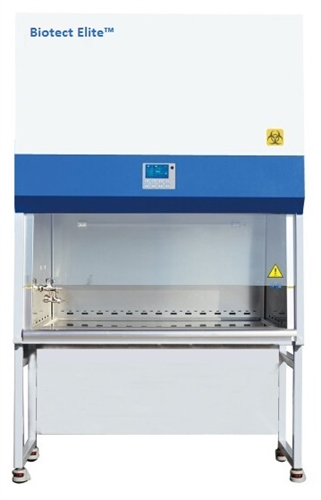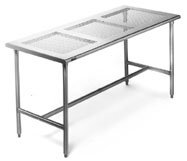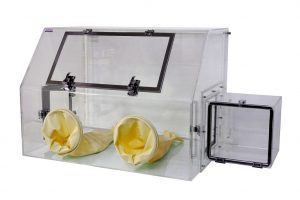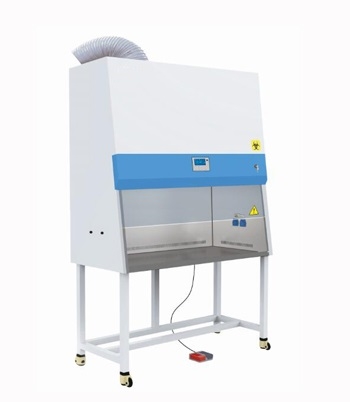
When your laboratory has limited space, every piece of equipment needs to earn its footprint. A benchtop biosafety cabinet can give you controlled workspace for microbiological procedures without requiring the floor area of a larger cabinet. However, choosing a compact unit should not mean compromising the containment requirements of your work. You need to consider cabinet class, work area, airflow, installation, certification, and everyday usability before making a purchase.
Start With Your Laboratory Work
Before comparing cabinet dimensions, identify exactly what you will handle inside the cabinet. Consider the microorganisms, samples, procedures, quantities, and potential hazards involved.
For many laboratory applications, a Class II biosafety cabinet provides personnel, product, and environmental protection. The CDC and NIH explain that Class II cabinets use HEPA-filtered airflow as part of their containment system.
You should also determine whether your work involves volatile toxic chemicals or radionuclides. A standard cabinet intended primarily for biological work should not automatically be treated as suitable for chemical hazards. Your risk assessment should determine the appropriate cabinet type and configuration.
Measure Your Available Bench Space
In a compact laboratory, cabinet dimensions matter as much as internal capacity. Measure the available bench before you compare products.
Record:
- Available width and depth
- Maximum cabinet height
- Distance from walls and nearby equipment
- Electrical outlet location
- Clearance around the cabinet
- Access routes for delivery and installation
- Available working space for the operator
Do not measure only the cabinet footprint. You also need sufficient space for safe operation, maintenance, filter servicing, and movement around the workstation.
A smaller cabinet may fit your bench perfectly but become impractical if nearby equipment blocks access or interferes with airflow.
Compare Workspace With Your Actual Workflow
A compact biosafety cabinet should provide enough usable work area for the procedures you perform regularly. Avoid choosing the smallest cabinet simply because your laboratory has limited space.
Think about the equipment and materials you place inside the cabinet. Will you need racks, pipettes, containers, waste receptacles, or small instruments? If your work requires several items simultaneously, an extremely narrow work zone may slow you down and encourage poor organization.
Look for a practical balance between compact laboratory footprint and usable biological safety cabinet workspace. Your goal is to maximize productivity without overcrowding the work area.
Evaluate Airflow and Cabinet Type
Airflow is one of the most important specifications to review. Class II cabinets use controlled airflow and HEPA filtration to provide containment and product protection. For example, the CDC describes Class II A2 cabinets as having a minimum calculated or measured inflow velocity of 100 feet per minute.
For limited-space laboratories, a Class II A2 configuration can be particularly relevant when your work does not require volatile chemical handling. NIH guidance notes that A2 cabinets can offer a simpler installation when potentially volatile materials are not being used.
However, you should never select a cabinet type solely because it is easier to install. Match the airflow and exhaust configuration to your documented laboratory risk assessment and facility requirements.
Check Installation Requirements Before Buying
Limited space often creates installation challenges. Check whether the cabinet requires external exhaust, a canopy connection, dedicated ductwork, or other facility modifications.
A cabinet that fits physically may still be unsuitable if your laboratory cannot support its ventilation requirements. CDC guidance emphasizes that BSCs should be installed and operated so room-air fluctuations do not interfere with cabinet effectiveness, and cabinets should be positioned away from doors and heavily traveled areas.
You should therefore inspect the room’s airflow patterns, doors, supply vents, traffic paths, and surrounding equipment before finalizing your selection.
Consider Certification and Maintenance
Your purchase decision should include long-term service requirements, not just the initial cabinet dimensions.
Ask about:
- Initial certification
- Recertification requirements
- HEPA filter replacement
- Filter accessibility
- Blower and airflow monitoring
- Service availability
- Replacement parts
- Decontamination procedures
CDC guidance states that Class II BSC performance should be verified during installation and at least annually thereafter, with recertification also required after events such as HEPA filter replacement, certain repairs, or relocation.
If you expect to move the cabinet as your laboratory changes, include relocation and recertification requirements in your planning.
Prioritize Ergonomics and Daily Usability
Space-saving equipment still needs to be comfortable to use. Examine the sash arrangement, viewing area, lighting, controls, work-surface height, noise level, and operator access.
A cabinet that saves several inches of bench space but makes routine procedures uncomfortable may create unnecessary operational problems.
You should also organize the interior so clean materials, work-in-progress, and waste remain logically separated. Good organization helps you use a compact workspace efficiently without unnecessary movement.
Make Your Final Selection With Confidence
When you compare benchtop biosafety cabinets for small laboratory workspaces, consider the complete installation rather than cabinet size alone. Start with your biological hazards and required containment level, then evaluate work area, dimensions, airflow, exhaust requirements, certification, maintenance, and ergonomics.
A compact cabinet should fit your laboratory without forcing you to compromise the requirements of your work.
You can explore compact benchtop biosafety cabinet solutions for space-conscious laboratory setups from Global Lab Supply and compare options based on your application and available workspace. If you need help determining the appropriate configuration, contact Global Lab Supply for laboratory equipment guidance.
FAQs About Benchtop Biosafety Cabinets
What is a benchtop biosafety cabinet?
A benchtop biosafety cabinet is a compact containment cabinet designed to provide controlled protection during appropriate biological laboratory procedures while occupying less floor space than larger cabinet systems.
Is a Class II A2 cabinet suitable for limited laboratory space?
It can be suitable when its containment capabilities, installation requirements, and laboratory application match your needs. Always confirm the cabinet type through an appropriate risk assessment.
How much space should you leave around a biosafety cabinet?
The required clearance depends on the cabinet design, installation instructions, room layout, and applicable requirements. You should review the manufacturer’s specifications before installation.
Can you use volatile chemicals in a benchtop biosafety cabinet?
You should not assume that you can. HEPA filtration addresses particulate hazards, while gases and vapors can pass through HEPA filters. Chemical use requires a suitable cabinet configuration and risk assessment.
How often should a biosafety cabinet be certified?
Class II BSC performance should generally be verified at installation and at least annually, with additional certification after certain repairs, filter replacement, or relocation.